Ulrich Krause · 6 September 2026
Seasonal Ember Variations and Their Influence on Harbor Ecosystem Monitoring
Seasonal ember variations refer to periodic shifts in ember concentration levels that occur in harbor waters throughout the year, and these changes directly affect how monitoring programs track water quality, sediment composition, and biological activity in coastal environments. Data collected from multiple harbor sites show that ember levels rise during warmer months while they decline sharply in winter, creating distinct patterns that influence sensor calibration and sampling frequency. Observers note that these fluctuations often coincide with tidal cycles and freshwater inflows, which means monitoring protocols must adjust accordingly to maintain accuracy.
Understanding Ember Variations Across Seasons
Ember concentrations in harbor ecosystems follow predictable seasonal cycles driven by temperature, light exposure, and organic matter decomposition, and studies from the National Oceanic and Atmospheric Administration document these trends through continuous sensor arrays deployed at fixed stations. During spring and summer, increased solar radiation accelerates ember production in surface layers, whereas autumn brings cooler temperatures that slow the process and allow deeper mixing to redistribute ember particles. Winter months typically register the lowest ember readings because reduced biological activity limits new ember formation, yet storm events can temporarily spike levels through sediment resuspension.
Monitoring teams rely on these seasonal benchmarks to interpret real-time data streams, and equipment placed in high-traffic harbors requires more frequent maintenance when ember variations exceed average thresholds. Figures from long-term studies reveal that ember peaks in September often reach 30 to 40 percent above annual means in temperate regions, which is why September 2026 data collection campaigns are scheduled to capture potential anomalies linked to shifting climate patterns.
Impact on Ecosystem Monitoring Techniques
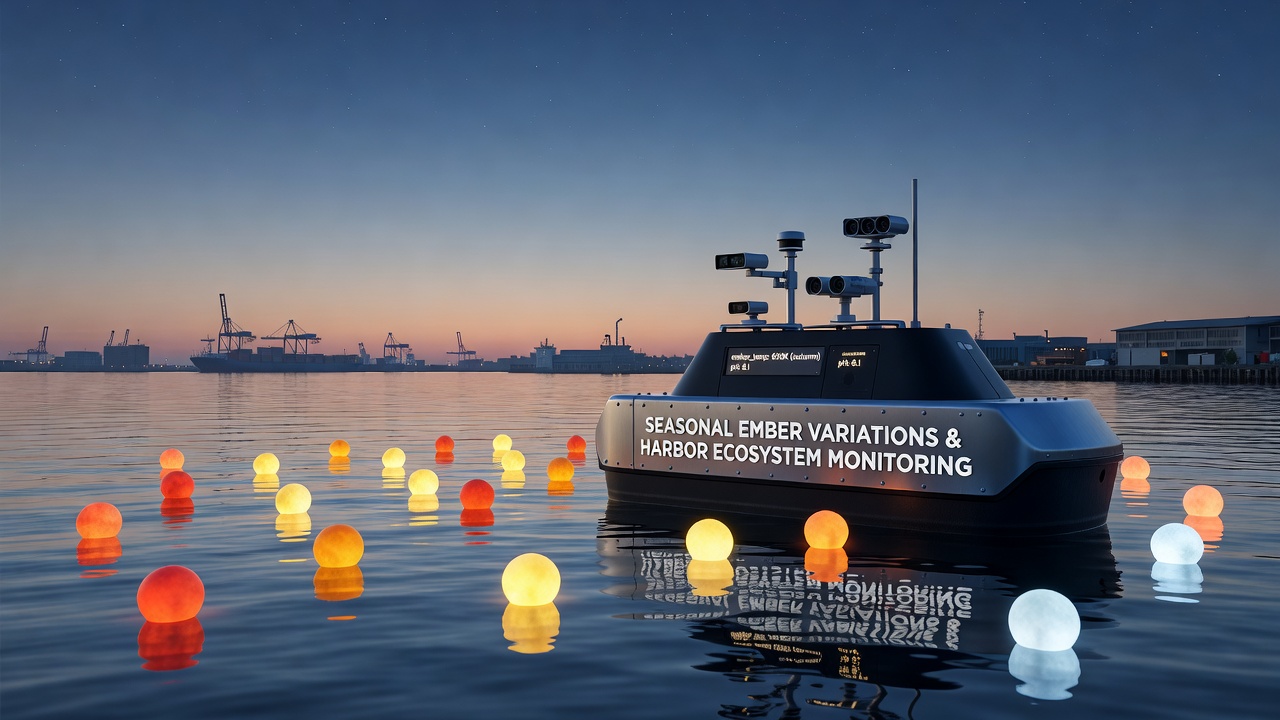
Harbor ecosystem monitoring programs integrate ember variation data into their models because unaccounted shifts can skew measurements of dissolved oxygen, nutrient loads, and heavy metal concentrations. Automated buoys equipped with optical sensors adjust their detection algorithms seasonally to compensate for ember interference, and field teams conduct cross-calibration checks every quarter to verify readings against laboratory standards. Researchers discovered that ember-induced signal noise becomes particularly pronounced during transitional periods between seasons, prompting the adoption of adaptive sampling schedules that increase frequency during known high-variation windows.

European Environment Agency reports highlight similar adjustments made at ports across the North Sea, where ember variations influence both chemical and biological indicator assessments. Monitoring protocols now include ember-specific correction factors derived from multi-year datasets, allowing analysts to distinguish natural seasonal changes from anthropogenic impacts such as industrial discharge or dredging operations. Those who manage these programs emphasize that accurate ember tracking supports better decision-making for habitat restoration projects and pollution control measures.
Regional Case Examples and Data Patterns
One study conducted along the Australian coastline tracked ember variations at three major harbors over five years and found consistent summer peaks followed by rapid autumn declines, with the strongest correlations appearing between ember levels and phytoplankton biomass. Canadian research stations in the St. Lawrence River estuary reported comparable patterns, noting that ember fluctuations also affect acoustic monitoring of fish populations because suspended ember particles alter sound propagation in shallow waters. These regional datasets feed into broader international databases that help standardize monitoring approaches across different climate zones.
Additional observations from ports in the Mediterranean show that ember variations interact with salinity gradients created by river outflows, and this interaction requires specialized sensor arrays capable of simultaneous multi-parameter recording. Data indicates that harbors experiencing higher vessel traffic exhibit amplified ember swings during peak seasons, which necessitates tighter quality control procedures during data validation stages.
Conclusion
Seasonal ember variations shape the reliability and interpretation of harbor ecosystem monitoring efforts worldwide, and ongoing refinements to sensor technology and sampling strategies continue to improve data quality as these patterns become better understood. Continued collection of ember-related metrics through 2026 and beyond will support more precise environmental assessments while helping managers respond to changing coastal conditions.